previous section
index
next section

Lecture 4: Britain and War ii) Northern Ireland

section | label

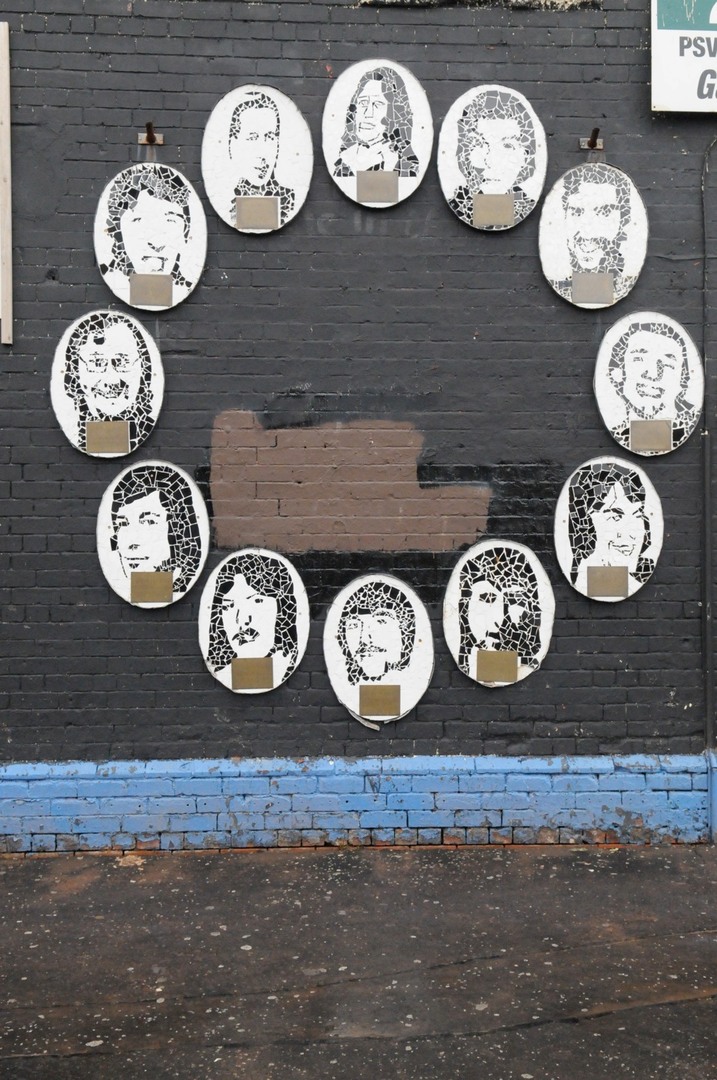
strikers memorial wall

When is a war not a war? Northern Ireland.

This lecture will explore the
implications of the conflict in Northern Ireland for British National identity and for popular memory.

We will look at attempts to silence and remember the conflict, through press censorship, oral history and movements to truth and reconciliation.


Some questions to think about before the lecture

resource | html

  • How successful were Thatcher’s attempts to cut the oxygen of publicity to terrorists? (you might think about debates over the BBC and Question time here)
  • How does memory and oral history function as the methodology of the 1980s?

Reading

label |


Reading

Set Reading

resource | html

Observing
the Eighties
The British Library

Russell Conlon   (01.00 - 10.52) next tour of duty(1.00-1.35), sniper during patrol(1.35-05,56)
Lawrence McKeown (20.38 - 22.12) (37.40 - 42.43) (45.47 - 46.45
Part B ( Start- 04.52)(23.59 - 29.16)
Oonagh Marron Women Against Imperialism (26:06 - 29.19)  hunger strike (10.55 - 14:19), prison conditions (14: 21 - 15:39)


University of Sussex Library

After the Brighton Bomb


*Dawson , G. Making peace with the past. (2007) Main / DA 990.U46 DAW

Seldon and Collings Britain under Thatcher pp17-18, pp33-34,


Further Reading

resource | html

Some Mass Observers touch on issues surrounding Northern Ireland throughout the 1980s. For example

1989 Spring-Disasters B1215  

One of our voices C1191 wrote from Northern Ireland. British Library oral histories include Oonagh Marron's and Lawrence McKeown's accounts of the Hunger Strikes and Russell Conlon's account of serving in the British Army in Northern Ireland.

For more background in issues of oral history methodology and memory in historical research read Portelli A ‘What makes oral History different’ in Perks and Thomson eds The Oral History Reader (2006) or Thompson, Paul Voice of the Past especially the chapter on ‘memory and the self’ ed (2007. You will find more literature on oral history in the extended reading for seminar 2. There are numerous online collections of sources that use personal testimony. For example the BBC has collected personal testimony.


Irish Journalist, Ed Moloney's account of press control 'Media Censorship During the Troubles' sets out some useful context and also raises some issues about the the assumed function of the press. The BBC's coverage of the Brighton bombing is available on their website.

If you would like to know more about 'Bloody Sunday', its aftermath and subsequent enquiries then the Bloody Sunday Trust website has a lot of useful resources. Tony Crowley curates an online archive of murals from Northern Ireland. You might make some interesting comparisons of the use of history in oral testimony and in murals.


Lecture Resources

label |


Lecture Resources

NI Chronology

resource | file

Lecture 4: Northern Ireland

resource | file