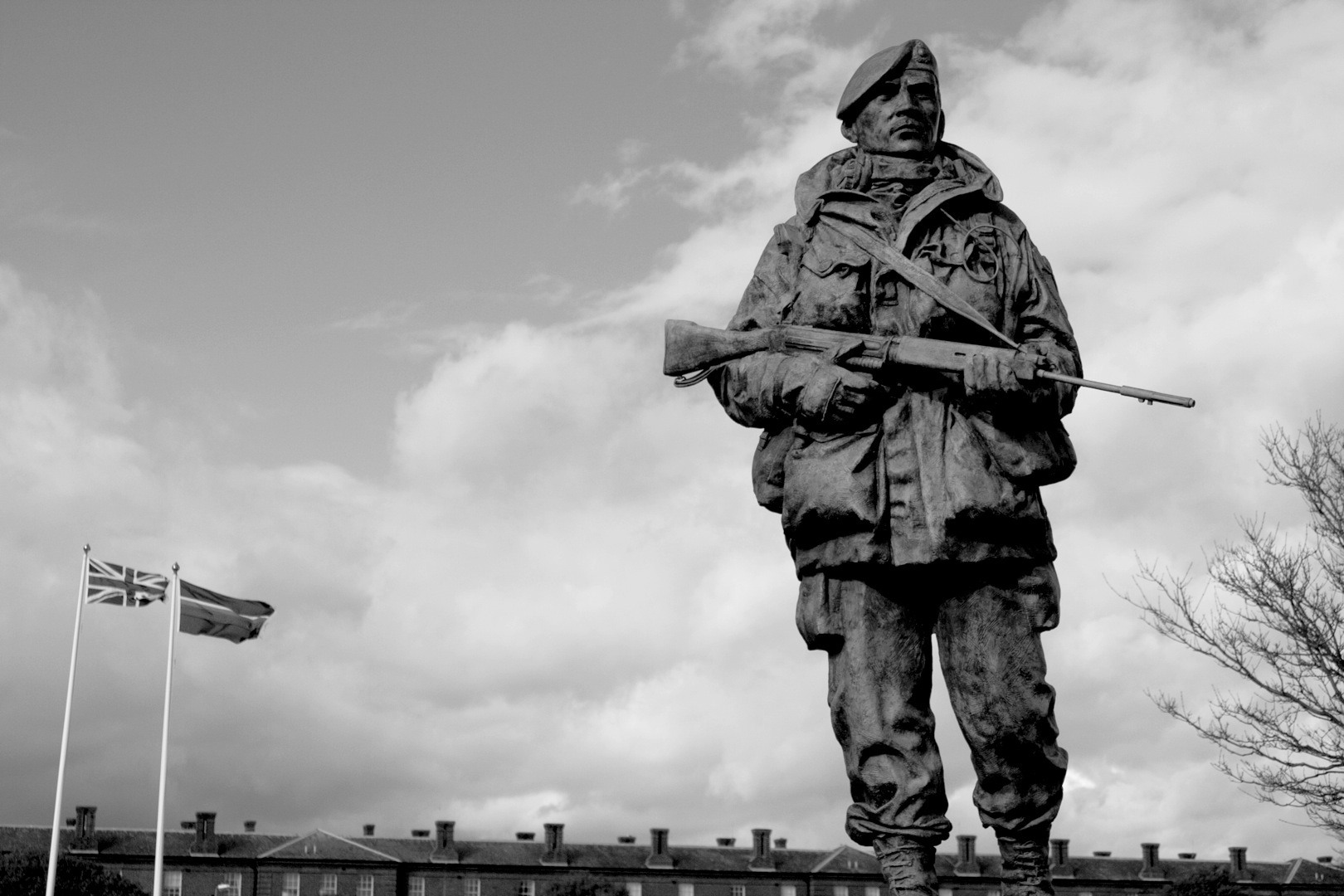
This week’s lecture will look at the relationship between
national identity and military action during the 1980s by looking at the
Falklands war.We will mainly concentrate on combat experience as
well as thinking about the ‘Falklands effect’ and how military decisions
related to Thatcherism’s agenda.
Questions to think about before the lecture
resource | html
What is the impact of war on government popularity and nationalism ?
Why do you think so many combatants developed post-traumatic stress
disorder after the Falklands War?
Why did Britain want to defend the
Falklands Islands?
The BFI resource Screenonline might be useful if you
are interested in more background on the Spitting Image clip used in the
lecture.
If you feel that you need some more historical background
on the Falklands War their are various online archives and guides. The
Guardian's
interactive chronology and Special Report are a good place to start. The
Imperial War Museum's online package includes oral histories of the war
from their collection. Britain's Small Wars pages on the Falklands War include a
virtual garden of remembrance. The transcript to the Witness Seminar The Falklands War includes memories from a number of key
military and political figures if you are interested in a more 'top down'
approach.
There are further discussions of the Falklands War
in MOP outside of the Special Directive. For example,
The British Library oral histories contain accounts
by a combatant Russell Conlon, Charles Drought(a
member of the Merchant Navy onboard the Atlantic Conveyor when it was hit), and
the wife of a soldier serving in the Falklands, Ann Newey. Newey's
contribution also offers some useful insight as to why people might want to be
interviewed for oral history projects. In Russell Conlon's
interview he describes the following: how he got to the
Falklands, (01:55-5.22) his journey to Ascension island and
rejoining his Unit (05.23-08:50), the arrival at Falkland
Sound (10.30- l2.32), landing at Goose Green and
Gurkas (12.32 - 15.28) 'H' Jones (22:46-24.49),
Surrender, Coming home on The Canberra (24.53 - 29.06),
cheering crowds when they got home (29.06 -
31.25 )
Roy Greenslade, a journalist on the paper at the time,
wrote a short article describing the context behind
The Sun's infamous Gotcha!
headline. Eric Hobsbawm wrote an article looking the impact of the rise of
patriotism associated with the 'Falklands Fallout' for Marxism Today in
January 1983. You might wish to explore other topics in the digitised
collection of left wing papers.