previous section
index
next section

Lecture 9: Youth and cultures of resistance

section | label
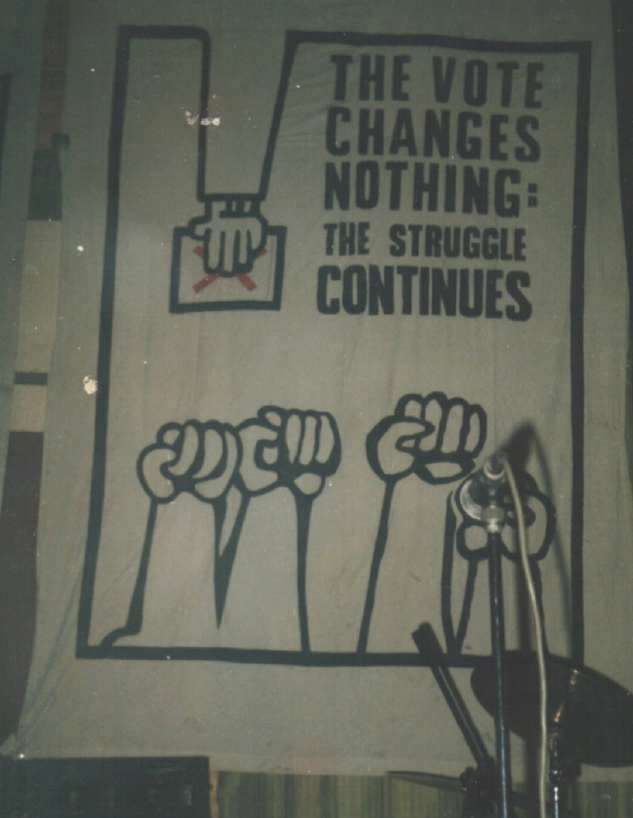
chumbawamba

Youth unemployment and the mainstream dissemination of youth culture’s codes brought together tribes of young people. Viewed as variously dissident, panics grew around young people’s behaviour. 

This lecture will look at counter-cultural practice and forms of political protest to outline the ways in which Youth became a significant issue in the law and order debate.

Some questions to think about before the lecture

resource | html

How political is popular culture?
What is a 'sell out' and does it matter?
Why do histories of popular culture tend to emphasize its radical roots?

Readings

label |


Readings

Set Reading

resource | html

British Library


Paul Ward on club culture and pirate radio. (01.59.22 - 01.01.38)


Louise Hale talks about the 'Pop Decade' and periodisation, boredom and youth (10.52-15.52)


* Osgerby, B ‘chapters 11 and 12’ in Youth in Britain since 1945 (1988) Short and ResHC 1225 UK (Osg)

*Cross, Richard, ‘Crass and the Anarcho-punk movement 1977-1985’ in Socialist History 26 p25


You might find it useful to listen to Pod 3: The Politics of Subculture and Gay Punks in T-shirts in the Introduction block


Further Readings

resource | html

Much of the reading suggested for wider research in Seminar 4 will be useful.

This montage of the 80s made by Chumbawamba's Dunstan Bruce for the Levellers makes an interesting accompaniment to the This is England credits from Lecture 1.


This account of Anarcho Punk Chambawamba is also quite wrong in places, but interesting (and touches on charity singles)


Recent interest in the Anarcho-punk scene led to a number of publications such as Cross, Richard‘Crass and the Anarcho-punk movement 1977-1985’ in Socialist History 26, Cogan, Brian, ‘Do they owe us a living? Of course they do!’, Crass, Throbbing Gristle, and Anarchy and Radicalism in Early English Punk Rock’ Journal for the Study of Radicalism 1, 2 (2007) and Ian Glasper's The Day the Music Died. You might find it useful to consider Manchester as a post-punk case study using the online MDMA collection of digitised zines.


If you would like to explore the historical development of ideas of subcultures and the ways in which a variety of disciplines have conceptualised youth culture then the introduction to Thornton and Gelder's Subcultures Reader is very useful.